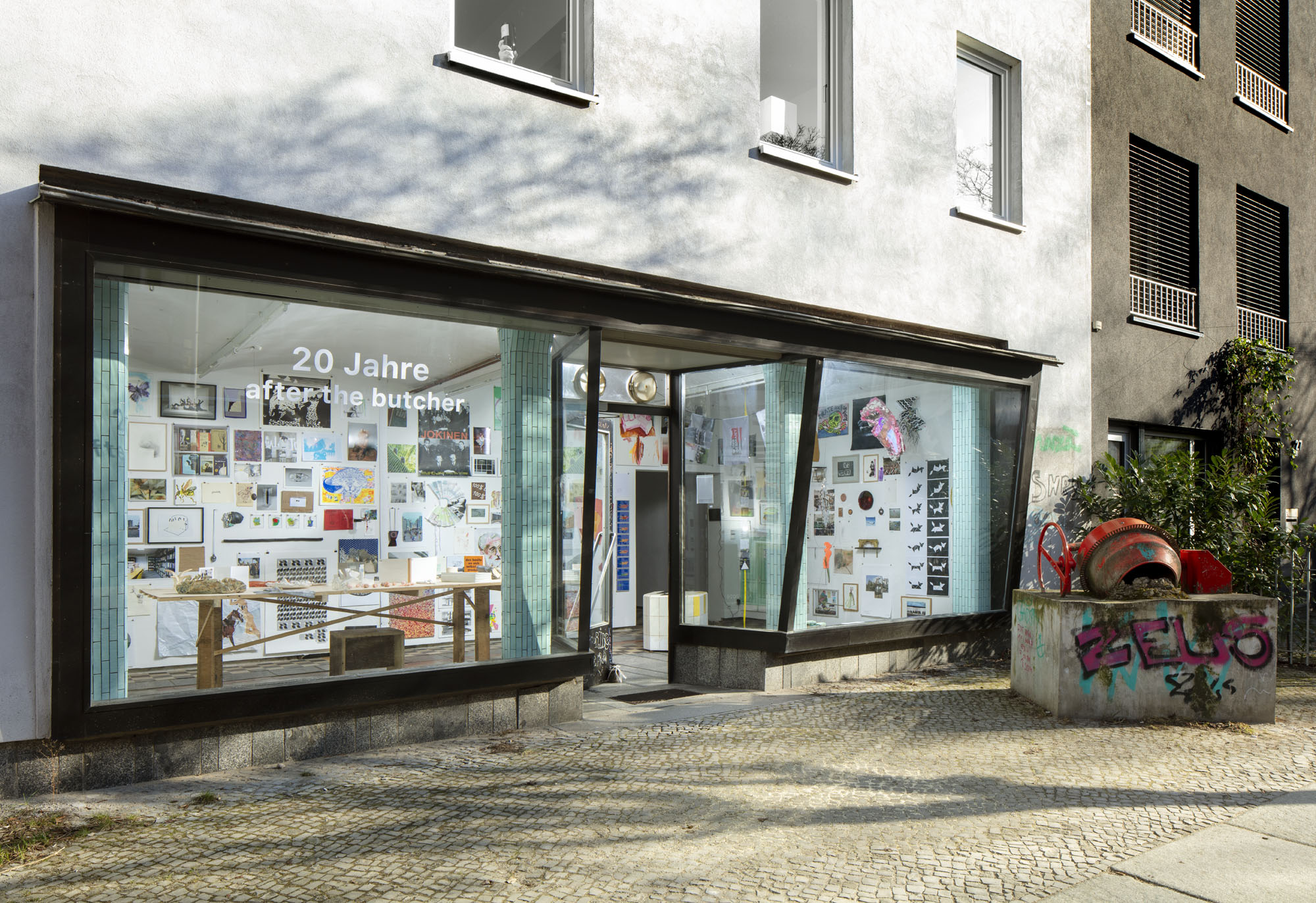
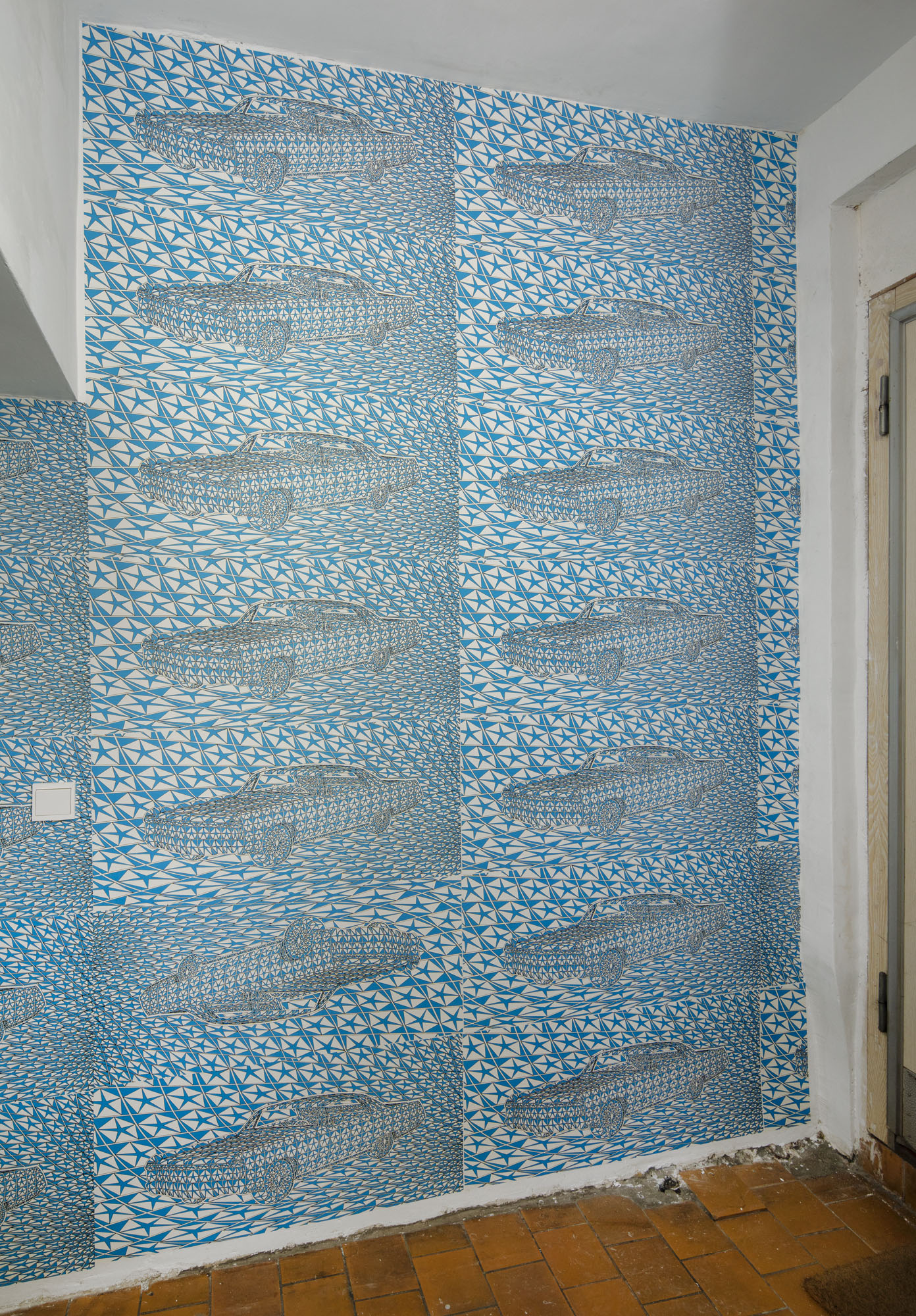
atb# 122 Susi Rogenhofer | Thomas Bratzke & Anna-Lena Wenzel

An die Arbeit!
Opening: Friday, June 5, 2026, from 7:00 PM;
Concert: Sweet Susie & Manni Montana, 9:00 PM

Exhibition: June 6, 2026 – July 5, 2026
Curated by: Ina Wudtke; film program curated by: Ulrike Jordan

Open by appointment:

Opening:
Friday, June 5, 2026, from 7:00 PM; Concert: Sweet Susie & Manni Montana

Film Screenings:
Saturday, June 20 at 7:00 PM Es kommt darauf an, sie zu verändern, Claudia von Alemann, BRD 1972/73, 54 min. OmeU
Friday, July 3, 2026, at 7 PM Ekmek parası – Geld fürs Brot, Serap Berrakkarasu, BRD 1994, 102 min. OmeU

Finissage (Closing Event):
Sunday, July 5, 2026, 3:00 PM – 6:00 PM Time capsule burial


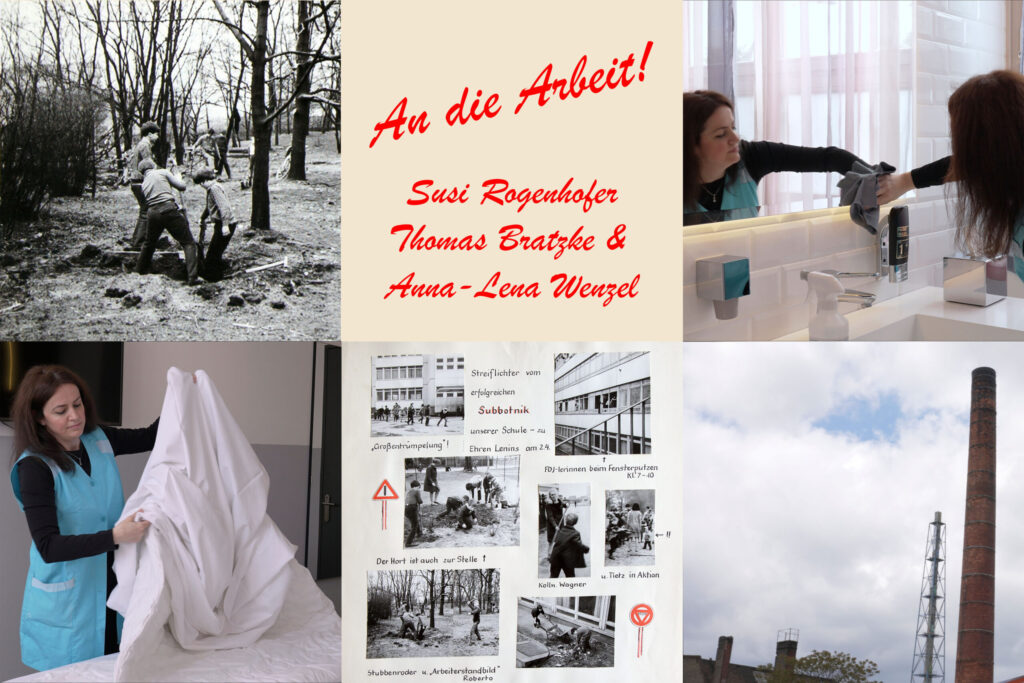
Work is taking place around the clock in a wide variety of locations. But who are the people performing the labor that the machinery of capitalism needs to keep running? The exhibition An die Arbeit! (Work it!) creates a visual dialogue between the works of Vienna-based artist Susi Rogenhofer (aka Sweet Susie) and Lichtenberg-born artist Thomas Bratzke, who—together with cultural scientist Anna-Lena Wenzel—will create a participatory collage of voices and drawings for the show.

Susi Rogenhofer’s audio-visual series United Workers puts workers in the spotlight, making them visible and audible while showing them in all their human complexity. Since 2021, in collaboration with musician Manni Montana, Rogenhofer has been using cameras and audio recorders to explore worlds of production and labor in various countries—such as Austria, Mexico, and Namibia—and now also Berlin Lichtenberg. At the opening on Friday, June 5th, starting at 7:00 PM, Sweet Susie and Manni Montana will give a live presentation of  a 21st-century workers’ music.

While researching the collection of the German Historical Museum, Thomas Bratzke came across a time capsule titled Treasure Chest for the Year 2000. As it turned out, former classmates had produced photos, letters, and drawings as part of a school assignment around 1989 at the 19th POS “Robert Uhrig” (today’s Schule am Tierpark). These items were stored in a chest and buried on the school grounds. Bratzke, who had moved to the West with his family and was therefore not involved in the original time capsule, now wants to repeat this experiment. He is inviting his former classmates, as well as young people currently attending school in Lichtenberg, to collaborate on Treasure Chest of Work – A Time Capsule for the Year 2050. In doing so, he and Anna-Lena Wenzel are exploring the following questions: How has the understanding of “work” changed since the “pioneer assignments” gathered in the original treasure chest? Bratzke and Wenzel will transform the collected and newly created visual and textual material into a wall piece, which will then be buried in a time capsule on the “after the butcher” premises.

An accompanying film program will examine female and migrant labor from a historical perspective.

Susi Rogenhofer (aka Sweet Susie, born 1971 in Vienna) combines art and music in her practice. Using film as a medium, her stagings, performances, and installations—primarily set in public spaces and realized for platforms such as the Wiener Festwochen—negotiate social and ecological questions. In her work, she provides insights into various lived realities, such as those of workers, making them visible and audible to create a public presence for those underrepresented in the existing order. Her previous experience as a club operator at Vienna’s Flex (1995–2007) and as an internationally active DJ and electronic musician continues to influence her artistic practice today.

Manni Montana (Manfred Schmeczka, born 1968 in Vienna)
Electronic musician and social worker Manni Montana began his career in the 1980s as a bassist in post-punk and industrial rock bands, before turning to electronic music in the 1990s. With the duo BASK and later as a solo artist, he released internationally successful records on Dope Noir Records. In 2010, he founded the project CONTACT with Sweet Susie and worked with Franz Hautzinger, amongst others. Today, he devotes himself to new sound experiments in projects such as United Workers.

Thomas Bratzke (aka ZASD, born 1977 in Berlin)
is a sculptor who has worked since the early 2000s with an expanded definition of sculpture that incorporates space, bodies, signs, and social processes. In his films and installations, Bratzke processes autobiographical experiences from his childhood in the GDR.

Anna-Lena Wenzel (born 1980 in Hamburg)
is a writer and artist. She writes mainly about art and for artists, preferably in the form of interviews (including for the ifa-Galerie and the nGbK). In 2022/23, as part of the exhibition Klassenfragen – Kunst und ihre Produktionsbedingungen (Class Issues – Art and its Conditions of Production) at the Berlinische Galerie, she engaged intensively with the working conditions of cultural practitioners. From 2019 to 2025, she was co-director of the project space Kleiner Raum für aktuelles Nichts in Kreuzberg.

With friendly support by:


#121 Heidrun Holzfeind & Elke Marhöfer

STOP THE CONSPIRACY AGAINST ART AND NATURE

Opening: 17 April 2026, from 7 pm

From 9:30 pm: music by Martin Ebner

Exhibition: 18 April 2026 – 31 May 2026

Finissage: 31 May 2026, from 3-6 pm

6-8 pm listening session: Frauke Boggasch will play tracks from her collection of Japanese noise music.

Open by appointment: 0178 3298106 or 

Longtime friends Elke Marhöfer and Heidrun Holzfeind explore the transformative potential of social and ecological realities, whether through nonhuman actors such as animals, plants and objects, or through people and the urban and architectural environments they inhabit.

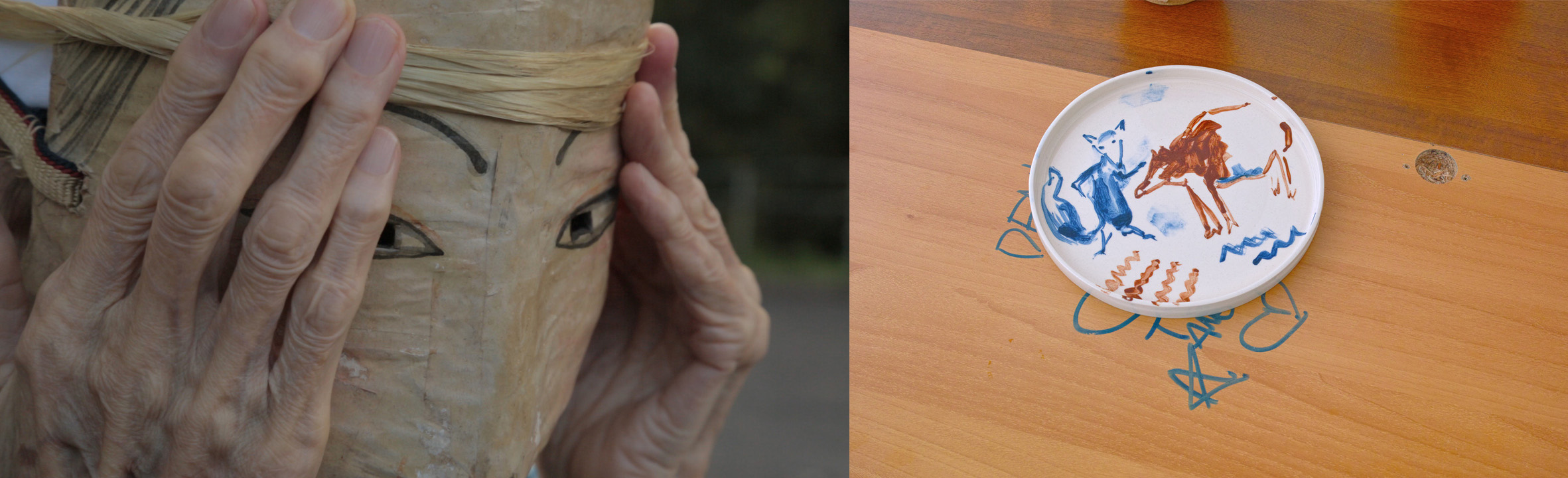
The latest body of work by Elke Marhöfer emerges from an engagement with animistic pottery. Two interconnected series are presented in the exhibition. from 7pm to 4am brings together a range of nocturnal protagonists—figures that inhabit her garden during these hours, occupying a threshold between observation and imagination. witch marks engages with apotropaic symbols historically used to ward off misfortune. These include eye motifs that operate as protective signs while evoking a symbolic and material continuity with vernacular traditions.

Objects may possess a functional use and still exist as contemporary art—a cup or a bowl, for instance. Utility does not preclude their status as art; rather, such objects can be understood as experimental articulations of the virtual, or of aisthesis, in relation to one’s lived environment. These dimensions are not mutually exclusive. Yet Western modernity has historically imposed an ontological divide, maintaining a distinction between fine art and applied art.

Heidrun Holzfeind presents hervideo installation the time is now. (2019) which consists of two films with the Japanese shamanic improvisation duo IRO (Shizuko and Toshio Orimo). For the couple, their musical experimentation goes hand in hand with their activist involvement in the peace and anti-nuclear movement and a free-spirited way of life. They espouse an animist and pantheist worldview and vehemently oppose commercialism in all its forms. Holzfeind interlaces their music and philosophy with the ideas set in stone in Takamasa Yosizaka’s Inter-University Seminar House (1965) in Hachioji, Tokyo. 

The question of how architecture works in everyday life and as a social space has long been a central concern in Heidrun Holzfeind’s works. They examine alternative ways of life outside of capitalist society, strategies of resistance and the potential for social change in everyday life. 

Save the date: Ikebana workshop with Natalie Noti, May 9, 2:30-5 pm
To register, please contact  or insta @flowersandmoods; more detailed info will follow.


http://www.heidrunholzfeind.com     
https://elkemarhoefer.xyz/

The exhibition is organized by: Katarina Šević and Gergely László

atb#120. ATB4ever – Practices of Solidarity

anniversary exhibition! 

Finissage: Sunday, 12 April, 3-6 p.m.

Until than open only by appointment: 01783298106 or 

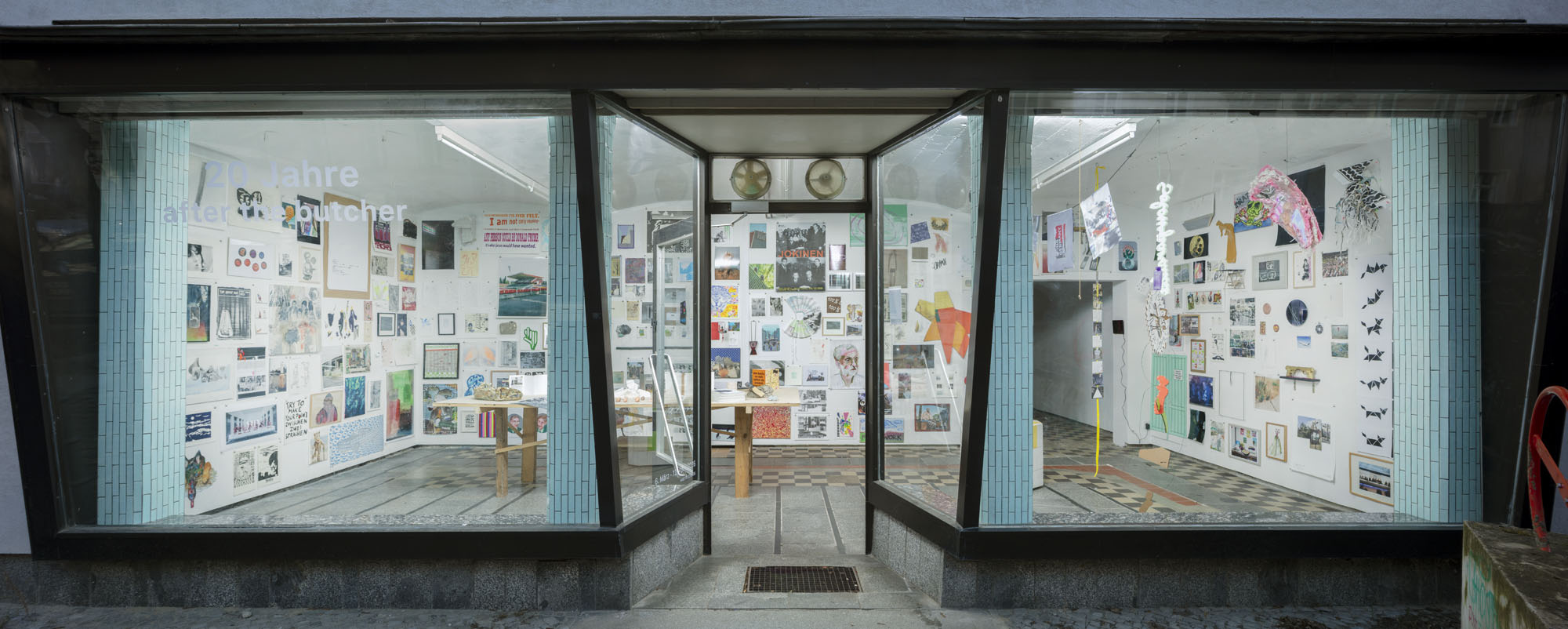
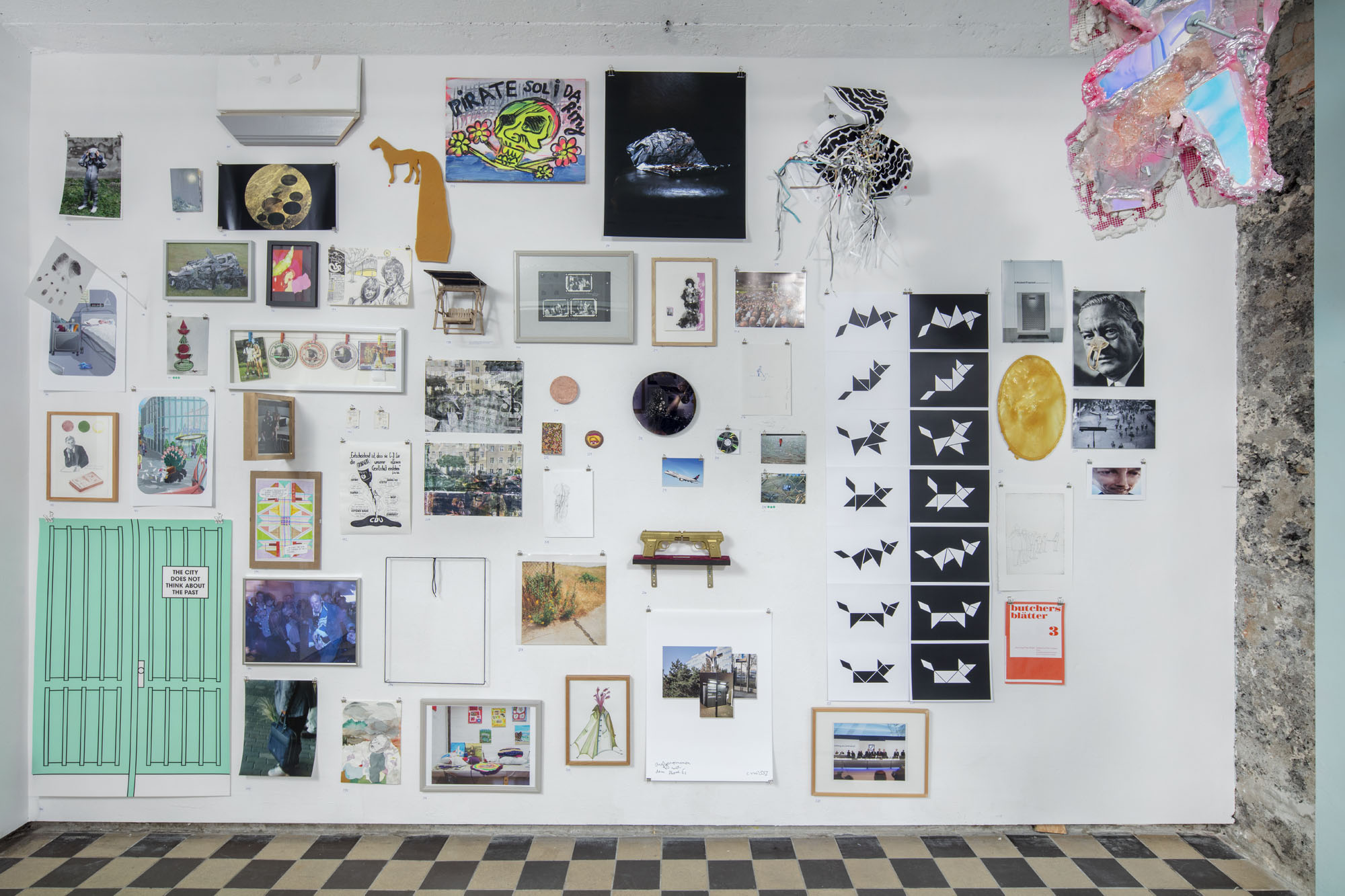
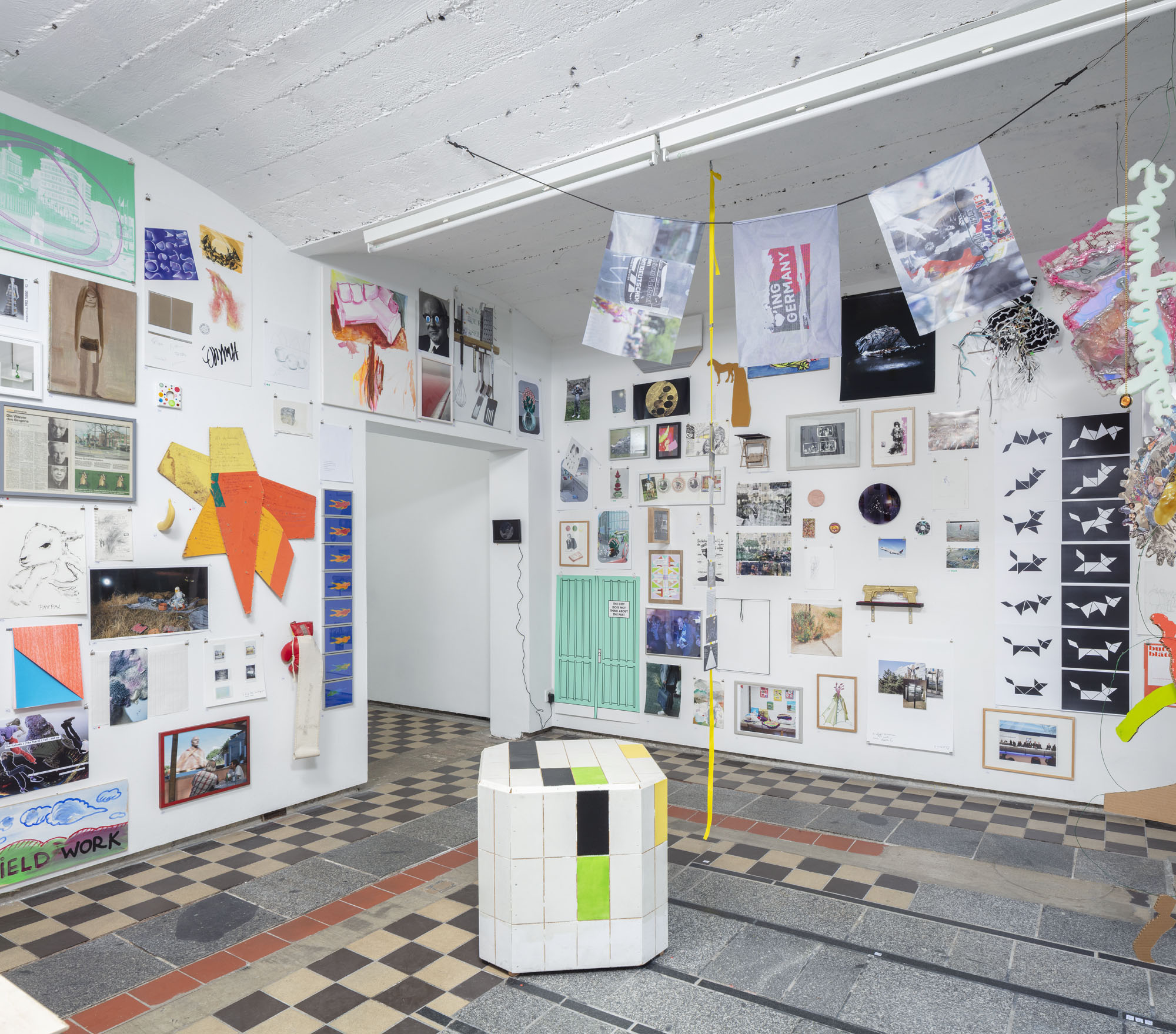
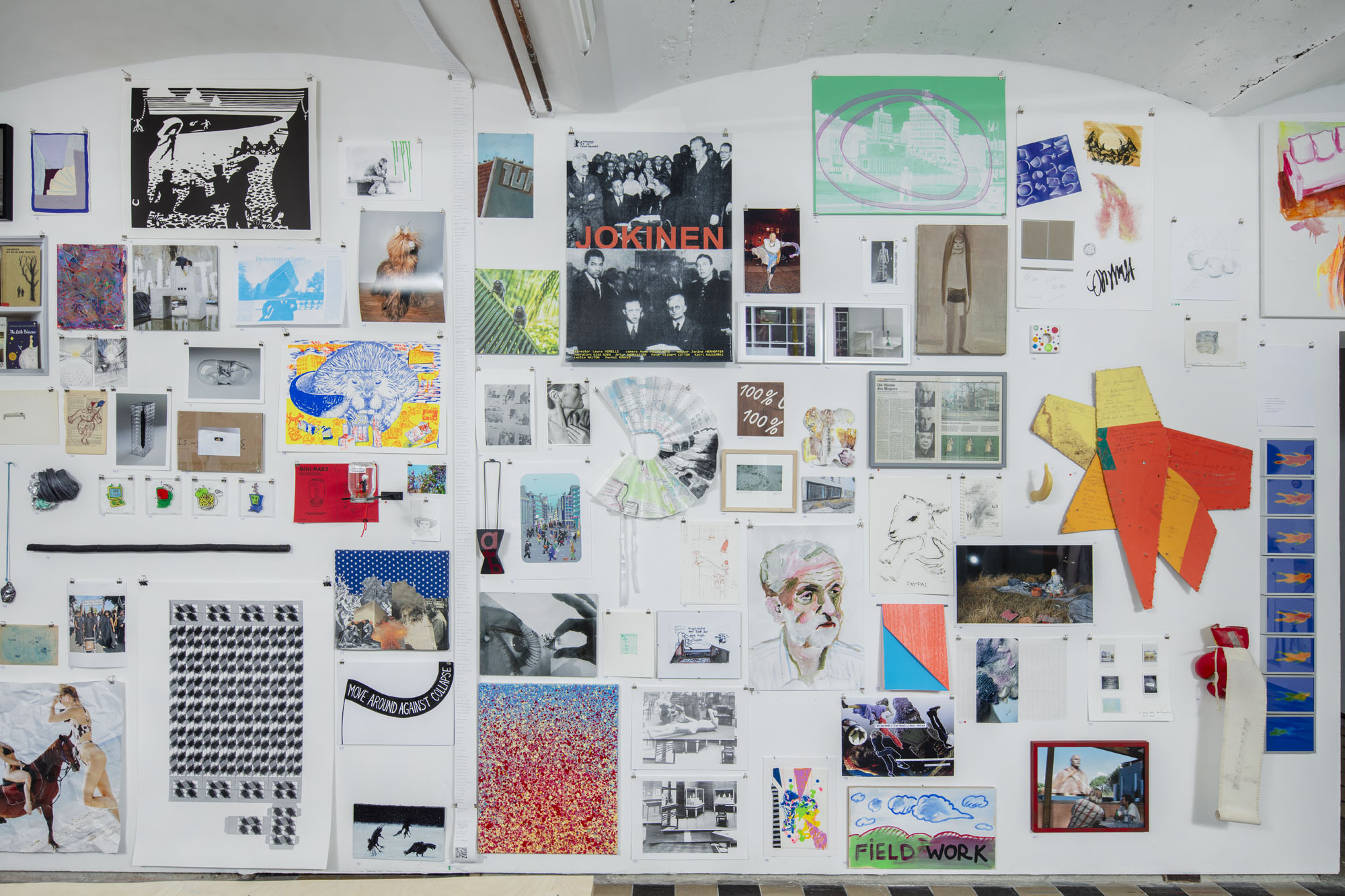
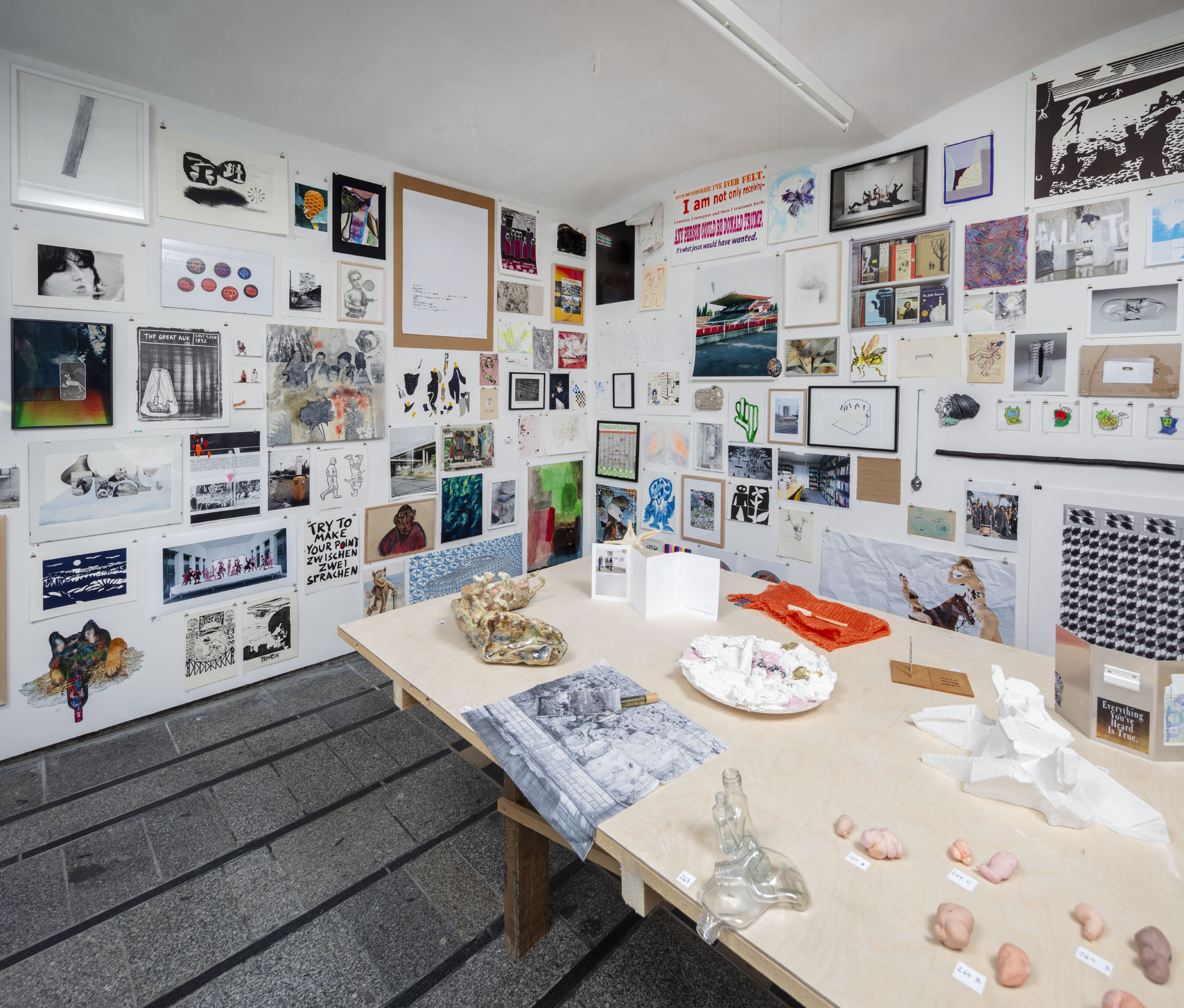
For 20 years, ATB has developed artistic practice in the social sphere – for solidarity, debate, publicity and independence.

To mark this anniversary, we are bringing together companions, accomplices and future allies:

Over 200 artists are participating with fantastic works of art – almost all of which are solidarity contributions.

Come along, celebrate with us – and support our artistic and political work.

We would like to express our sincere thanks to all artists involved for their generosity and trust:

Endre Aalrust, Mohamed Abdulla, Tanya V. Abelson, Erfan Aboutalabi, Lena-Elise Aicher, Efe Aksu, Heather Allen, Ulf Aminde, Ayreen Anastas & Rene Gabri, Michel Aniol, Benjamin Badock, Michael Baers, Jamila Barakat, Thomas Bayrle, Göksu Baysal, Oliver Belling, Anastasiia Belousova & Nico Dasenbrock, Elisa T. Bertuzzo, Charlotte Besuijen, Wolfgang Betke, Michael Beutler, J.R. Blank, Frauke Boggasch, Angela Bonadies, Charlotte Bonjour, Shannon Bool, Elfe Brandenburger, Axel Brandt, Ulu Braun, Wolfgang Breuer, Peter Bux, Suna Choi, Ezra Æ. Church, Costantino Ciervo, Clegg & Guttman, Paul Coldwell, Daniela Comani, Alice Creischer, Sambaran Das, Chto Delat, Winfried Demhartner, Jean-Ulrick Desert, Almut Determeyer, Stephan Dillemuth, Discoteca Flaming Star, Dogan Dogan, Antje Dorn, Eva Durovec, Jutta Eberhard, Martin Ebner, Maria Eichhorn, Michaela Eichwald, Pia Leon Eikaas, Lukas Einsele, Robert Estermann, Katja Eydel, Nadine Fecht, Gard Frantzsen, Heiner Franzen, Doris Frohnapfel, Else Gabriel, Geoffrey Garrison, Florian Gass, Stephan Geene, Axel Gerber, Ingo Gerken, Surya Suran Gied, Gregor Gleiwitz, Jeremy Glogan, Erik Göngrich, Undine Goldberg, Asta Gröting, Stefan Gugerel, Florian Haas, Rosa Lena Händle, Kim Hankyul, Lydia Hamann & Kaj Osteroth, Alex Hamilton, Sebastian Hammwöhner, Tang Han, Lise Harlev, Eva Haule, Jochem Hendricks, Philipp Hennevogl, Cornelia Herfurtner, Friedrich Herz, Heidrun Holzfeind, Andy Hope 1930, Laura Horelli, Sonja Hornung & Daniele Tognozzi, Florian Hüttner, Franziska Hufnagel, Dominique Hurth, HUSS WEISE, Stephan Janitzky, Maarten Janssen, Anet Jünger, Anne Kaminsky, Wendelin Kammermeier, Johanna & Helmut Kandl, Heiko Karn, Katharina Karrenberg, Annette Kierulf, Caroline Kierulf, Thomas Kilpper, Hyon-Soo Kim, Gisela Kleinlein, Barbara Klinker, Franziska Kneidl, Karen Koltermann, Caroline Krause, Till Krause, Solon Krieger, Petra Kübert, Luis Kürschner, Thomas Lang, Gergely László, Birgit auf der Lauer, Laurie Lax, Julia Lazarus, Ines Lechleitner, Niina Lechtonen-Braun, Jens Lehmann, Leon Locher, Thomas Locher, Malte Lochstedt, Romain Loeser, Victoria Lomasko, Britta Lumer, Flo Maak, Haure Madjid, Lee Maelzer, Katrin von Maltzahn, Rita Marhaug, Maslowski/Grenzhaeuser, Corinna Mayer, Hans-Jörg Mayer, Jonathan McLeod, Eric Meier, Eva Christina Meier, Michaela Melian, Helmut Menzl, Lilly Merck, Yves Mettler, Karolin Meunier, Jöran Möller, Jörg Möller, Stephan Mörsch, Eduardo Molinari, Tobias Morawski in Kollaboration mit ANPU VARKEY und TFTS/RYC, Christina Morhardt, Ariane Müller, Karsten Neumann, Rainer Neumeier, Irina Novarese, Clare O’Connor, Sim Oerthel, Julia Oschatz, Orakel, Elvis Osmanovic, Ottjörg A.C., Ludger Paffrath, Sophie Pape, Caspar Pauli, Stefan Pente, Manfred Pernice, Hans Petri, Pfelder, Ciara Phillips, Susanne Pittroff, titre provisoire (Cathleen Schuster & Marcel Dickhage), Josephine Pryde, Rena Rädle & Vladan Jeremic, JP Raether, Ayumi Rahn, Bianca Rampas, Judith Raum, Claudia Reinhardt, Barak Reiser, Gunter Reski , Bernward Reul, Mirja Reuter, Nina Rhode, Jens Risch, Stefan Römer, Judy Ross, Ulla Rossek, Anastasya Ryabova, Yaser Safi, Julia Sand, Giovanna Sarti, Edwin Schäfer, Romana Schmalisch & Robert Schlicht, Martin Schmidl, Dierk Schmidt, Konstanze Schmitt, Christian Schwarzwald, Maya Schweizer, Ulrika Segerberg, Thomas Seidemann, Eva Seufert, Katarina Šević, Setareh Shabazi, Andreas Siekmann, Nelly Siekmann, Sigune Siévi, Dominik Sittig, Sean Snyder, Kathrin Sonntag, Selou Sowe, Carola Spadoni, Sarah Staton, Ernst Markus Stein, Anton Stoianov, Veit Stratmann, Caro Suerkemper, Jan Svenungsson, Rebecco Ann Tess, Mirjam Thomann, Jan Timme, Sophie Trenka-Dalton, Petra Trenkel, Micki Tschur, Julian Turner, Sveinung Unneland, Bernadette Van-Huy, Maria Vedder, Katleen Vermeir & Ronny Heiremans, Gabriela Volanti, Raul Walch, Ute Waldhausen, Fritz Laszlo Weber, Klaus Weber, Herbert Wiegand, Philip Wiegard, Klaus Winichner, Norbert Witzgall, Alexander Wolff, Elisabeth Wood, Ina Wudtke, Florian Wüst, Simiao Yu, Simone Zaugg, Günter Zehetner, Joseph Zehrer, Anna Zett, Florian Zeyfang, Xiaopeng Zhou, Christina Zück and others

photography: Ludger Paffrath

atb#119 Vorraum – titre provisoire + Simm Oerthel

Occupy Vorraum!

A conversation with Michael Jäger (author and journalist, co-founder of the weekly newspaper der Freitag)

as part of the finissage for the current exhibition

Sunday, 22 February 2025, from 5 p.m.

Open from 4 p.m. to 7 p.m.

We invited Michael Jäger to a discussion based on his article on tech fascism and dark enlightenment (see appendix in German) published in the weekly newspaper der Freitag in December 2025. He is a political scientist, publicist and editor of der Freitag since its founding. We would like to talk to him about what interested us in the exhibition Vorraum by titre provisoire (Cathleen Schuster and Marcel Dickhage) and Sim Oerthel. We see it as a “dance” between the three figures by Sim and the performers in Cathleen and Marcel’s Los Angeles film, all of whom are, in a sense, performing in political “antechambers” (Vorraum). They illustrate that there is continuity (and no contradiction) between the liberalism of the market economy and the fascism that is currently unfolding. In Sim Oerthel’s work, this dance is performed by deformed and reassembled body parts of mannequins. They are covered with batteries, bottle caps and fascist historical trash. In Cathleen and Marcell’s film, figures from a neoliberal cultural worker precariat “dance” and interact while clinging to the status quo in increasingly overheated global cities and war scenarios. These are choreographies that have something in common, which we could call both paralysis and unleashing… In our discussion, we would like to explore these developments and consider what emancipatory courses of action and practices are available to counter them.

Organised by Alice Creischer and Andreas Siekmann.

Opening: 16 January 2026, from 7 p.m.

Exhibition: 17 January – 23 February 2026

Open by appointment: 0178 3298106 or 

Vorraum 

The term ‘Vorraum’ (anteroom / pre-space / pre-political space) is now being used by political parties. It distinguishes between a society and its political actors. This distinction makes it possible to separate right-wing parties from their followers. In the pre-space, symptoms can be slandered as causes and turned into scapegoats, Nazi symbols can be shown, Horst Wessel songs can be sung, people can be threatened, or forums can be littered with rubbish. But if pre-space means a gradual change in social subjectivity, then the interior of a car on a sunny morning in Los Angeles could also be a pre-space, where people talk about the impossibility that everyone in the world can have a shower each day. From there, we would then have to begin to think of the ‚pre-space’ as an unbroken arc leading to the lipstick traces on the title pages, street slogans and war memorabilia. 

titre provisoire, Cathleen Schuster and Marcel Dickhage show their film `A cold case of happiness´ (34 min), Sim Oerthel is showing three fragmentary figures that are related to each other.

Cathleen Schuster and Marcel Dickhage work from a research based approach in time-based media, with archives and text/image related. They collaborate as titre provisoire.
Sim Oerthel, born in Nuremberg in 1997, have been living in Vienna since 2020, where they study at the Academy of Fine Arts.
The exhibition is organised by Alice Creischer and Andreas Siekmann.